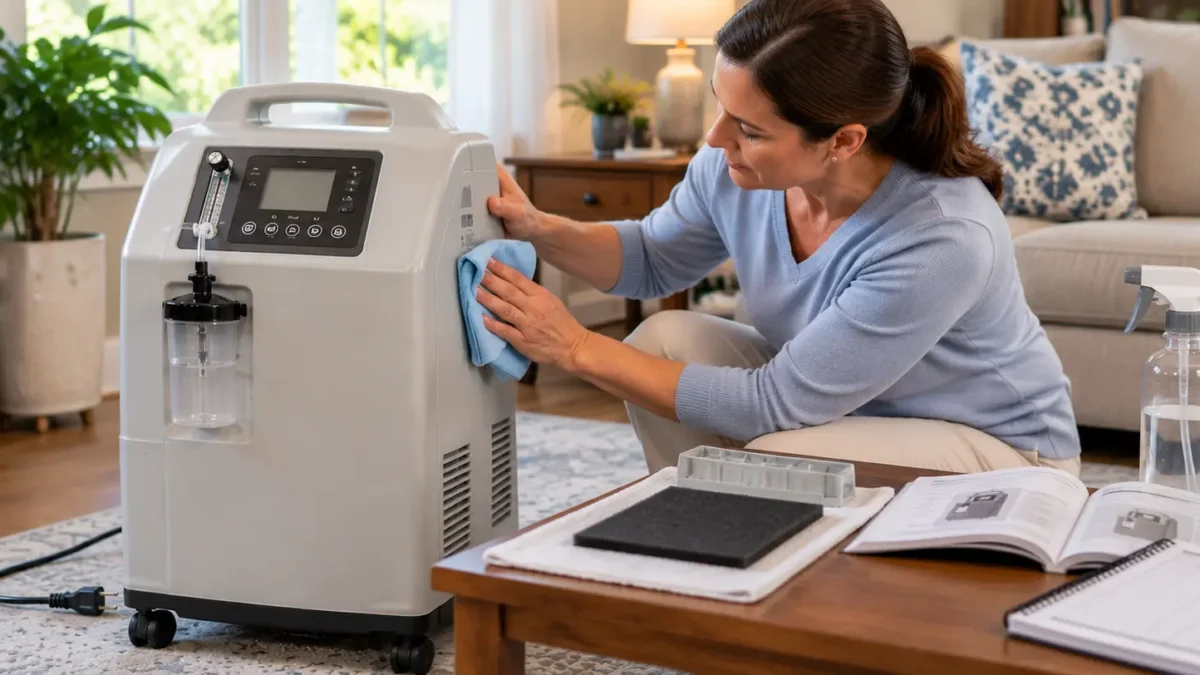
Home oxygen concentrator maintenance involves keeping the equipment clean, checking accessible filters, maintaining proper ventilation, and following the manufacturer’s recommended servicing instructions. These routine tasks help support reliable operation and allow users to identify potential equipment problems before they become more serious.
A home oxygen concentrator is a medical device that produces oxygen-enriched gas from surrounding air. Because it contains a compressor, filtration system, valves, and electronic components, proper care matters during long-term use.
However, maintenance requirements vary between manufacturers and models. Patients and caregivers should only perform the procedures that their equipment’s operating manual specifically permits.
Why Is Home Oxygen Concentrator Maintenance Important?
Regular maintenance helps keep a concentrator operating within its intended conditions.
During everyday use, dust can accumulate around external surfaces and air intake areas. In addition, filters and accessories may require cleaning or replacement according to the manufacturer’s instructions.
Ignoring these requirements may interfere with airflow or contribute to equipment problems.
Routine care also provides an opportunity to notice unusual sounds, damaged cables, warning lights, or other changes.
Nevertheless, cleaning cannot correct every mechanical problem. Internal faults require professional assessment.
Understanding Oxygen Concentrator Filter Maintenance
Filters help manage dust and airborne particles entering the equipment.
However, not every filter performs the same function or requires the same maintenance procedure.
External Air Intake Filter Cleaning
Some concentrators include accessible intake filters that capture larger airborne particles.
Depending on the model, users may need to wash, replace, or maintain these filters through another manufacturer-approved procedure.
Therefore, users should check the manual before removing or cleaning a filter.
If the manufacturer permits washing, follow the specified cleaning and drying instructions. Never reinstall a washable filter while it remains wet unless the manufacturer explicitly allows it.
Internal Filter Servicing
Certain concentrators contain internal filters that users should not access during routine maintenance.
These components may require replacement by an authorized service technician.
Opening the machine to access internal filters can expose users to electrical or mechanical hazards.
Therefore, caregivers should not attempt internal filter replacement unless the manufacturer specifically authorizes the procedure.
How to Clean a Home Oxygen Concentrator Safely
Cleaning generally focuses on accessible exterior surfaces rather than internal components.
Before beginning, follow the manufacturer’s shutdown instructions and disconnect the equipment from electrical power when directed.
If the patient requires uninterrupted oxygen therapy, arrange an appropriate alternative oxygen supply according to their clinical plan before stopping the concentrator.
Cleaning the Exterior Surfaces
Use the cleaning materials and methods that the manufacturer recommends.
For some models, this may involve wiping external surfaces with a suitable soft cloth.
However, avoid allowing liquid to enter ventilation openings, electrical connections, or the control panel.
Never immerse the concentrator in water or spray cleaning products directly into the machine.
Keeping Ventilation Openings Clear
Oxygen concentrators need sufficient airflow for normal operation.
Therefore, keep intake and exhaust openings free from obvious obstructions.
Avoid placing clothing, blankets, or other materials over the equipment.
Also, maintain the ventilation clearance that the manufacturer’s operating instructions specify.
Following Model-Specific Oxygen Concentrator Maintenance Instructions
Maintenance procedures should always match the exact concentrator model.
For example, buyers reviewing the DeVilbiss 525KS product details can identify the stationary oxygen concentrator manufactured by Drive DeVilbiss Healthcare and then consult its official operating manual for applicable cleaning and servicing requirements.
This distinction matters because instructions for one concentrator may not apply to another.
Filter designs, cleaning materials, maintenance intervals, and authorized service procedures may differ.
In addition, users should confirm that replacement components are compatible with their exact equipment model.
Using unsuitable filters or accessories may interfere with proper operation.
Routine Oxygen Concentrator Maintenance Checks at Home
A simple visual inspection can help caregivers recognize potential problems.
These checks do not require opening the machine or changing its internal settings.
Check the Power Cord
Look for visible damage, loose connections, or signs of overheating.
If the electrical cord appears damaged, follow the manufacturer’s safety instructions and contact the equipment provider.
Do not attempt unauthorized electrical repairs.
Observe Indicator Lights and Alarms
Check whether the concentrator displays its expected operating indicators.
Some models include oxygen concentration monitoring or alarms for particular equipment conditions.
However, indicator meanings vary between devices.
Always consult the operating manual before interpreting warning lights.
Inspect Accessible Oxygen Tubing
Look for obvious kinks, disconnections, or damage in accessible oxygen tubing.
The tubing must remain compatible with the prescribed delivery arrangement.
Do not change tubing length or accessories without confirming that the setup meets the manufacturer’s and healthcare professional’s instructions.
When Does an Oxygen Concentrator Need Professional Servicing?
Routine user maintenance cannot replace professional technical inspections.
A qualified technician may need to examine the compressor, valves, oxygen concentration performance, electrical components, or internal filtration system.
Potential warning signs include:
- Persistent equipment alarms.
- Unusual grinding or rattling sounds.
- Repeated unexpected shutdowns.
- Visible damage to electrical components.
- Changes in operation that the manual identifies as abnormal.
If these problems occur, contact the equipment provider or an authorized service technician.
Do not attempt to bypass alarms or modify internal components.
If prescribed oxygen delivery becomes unavailable, follow the patient’s clinician-approved backup plan.
The U.S. Food and Drug Administration’s guidance on home oxygen therapy provides further information about safe oxygen concentrator use and the importance of medical supervision.
Common Home Oxygen Concentrator Maintenance Mistakes
Several avoidable mistakes can interfere with safe equipment operation.
- Using incorrect cleaning products: Strong chemicals or unsuitable liquids may damage equipment surfaces or components.
- Ignoring filter instructions: Some filters require specific cleaning methods, while others need replacement.
- Blocking ventilation: Restricted airflow can interfere with normal equipment operation.
- Attempting internal repairs: Unauthorized repairs may create safety risks and damage the concentrator.
- Overlooking unusual alarms: Users should investigate warning signals according to the manufacturer’s instructions.
Avoiding these mistakes helps maintain a safer home oxygen equipment environment.
How Often Should Oxygen Concentrator Maintenance Be Performed?
There is no single maintenance schedule that applies to every oxygen concentrator.
Some external components may require frequent inspection, while other maintenance tasks occur at longer intervals.
The correct schedule depends on the manufacturer, model, operating environment, and equipment condition.
For example, a dusty environment may require additional attention within the limits of the manufacturer’s instructions.
Users should maintain a record of completed cleaning, filter replacement, and professional servicing when recommended.
This information can help equipment providers understand the machine’s maintenance history.
Final Thoughts on Home Oxygen Concentrator Maintenance
Regular care plays an important role in responsible medical equipment ownership.
Cleaning accessible surfaces, following filter instructions, checking ventilation, and recognizing equipment warnings can help support dependable operation.
However, users should always distinguish routine caregiver tasks from repairs that require qualified technicians.
By following the manufacturer’s maintenance guidance and maintaining appropriate professional support, patients and caregivers can help keep home oxygen equipment in suitable operating condition.